

Why the Cotswolds are having a Moment
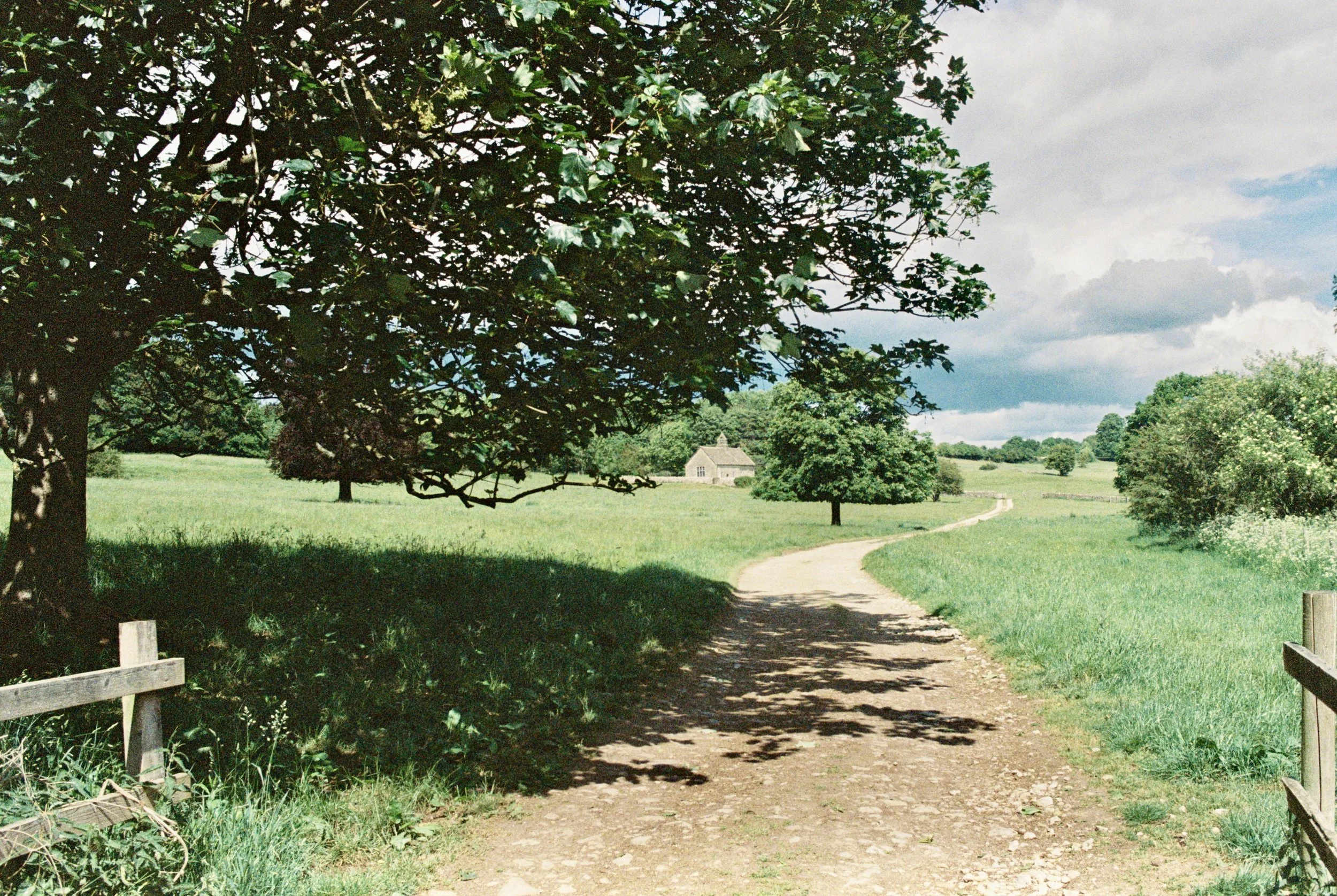
A public footpath leading to the ancient St. Oswald’s Church at Widford on a route from Burford to Swinbrook.
“The Cotswolds are having a moment.”
This was a comment made to me by a bookseller in the ancient market town of Stow-on-the-Wold last year while we were discussing the recent uptick in visitors, particularly from North America.
More and more people seem intrigued by the Cotswolds.
Travellers are adding it to their bucket lists. English cottage-style interiors are everywhere. Walking holidays are gaining popularity. People seem increasingly drawn to slower, more intentional ways of travelling.
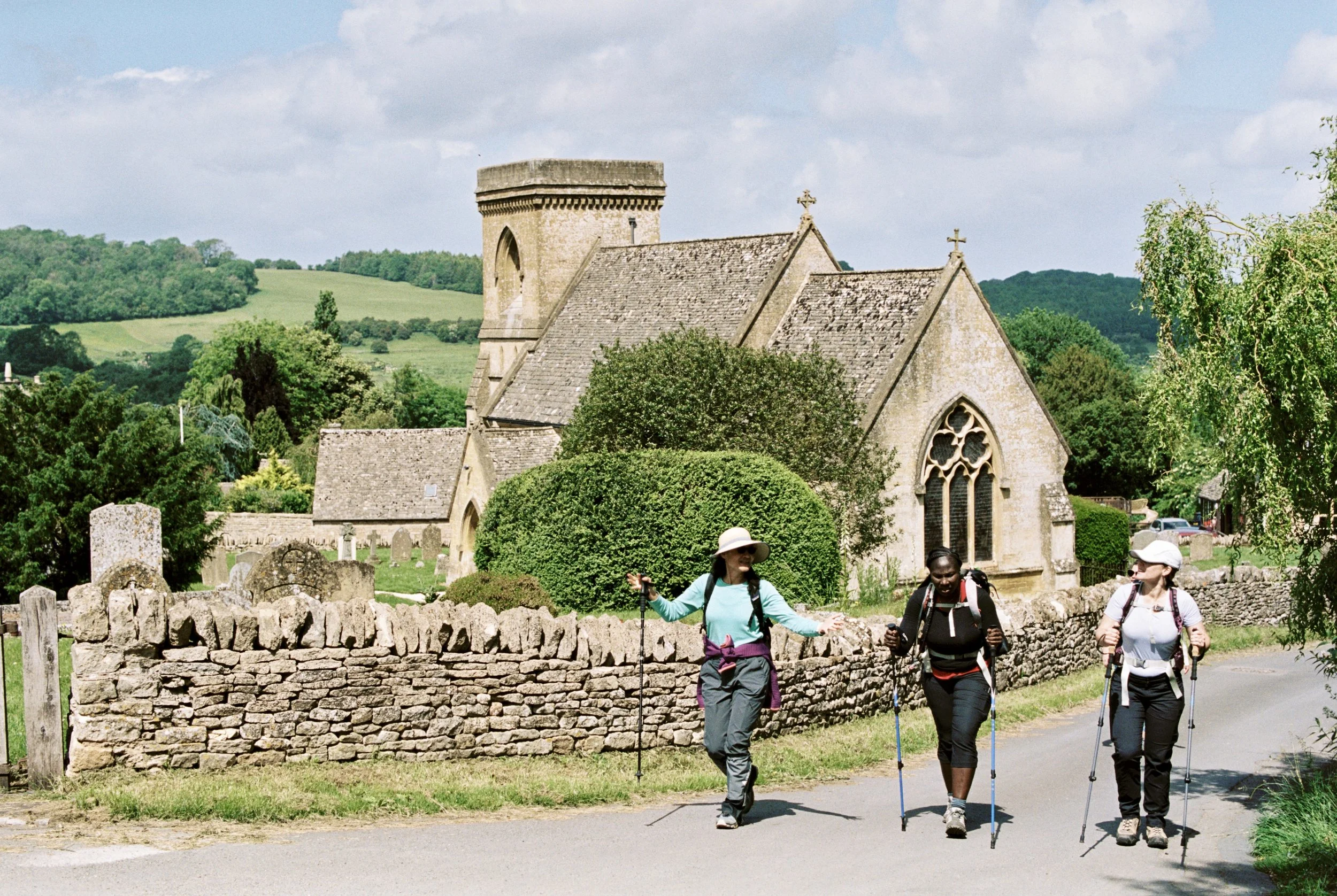
Guests on one of my Women’s Walking Retreats through the Cotswolds leave the village of Snowshill on our way to Broadway.
As a result, I found myself wondering why the Cotswolds, in particular, is generating so much interest.
I suspect the answer has less to do with the Cotswolds themselves and more to do with what many of us are longing for: less noise, deeper connection, reduced stress, and more authentic experiences.
The modern world asks a lot of us. We are constantly connected, constantly consuming information, and constantly being encouraged to do more. The pace can feel relentless.
The Cotswolds is the antithesis of hustle culture, maximizing algorithms, and clickbait. To experience the quintessential English countryside is to embrace nature's pace rather than the pace of the news cycle. The region offers visitors the chance to engage with centuries-old traditions that provide a sense of authenticity and stability, rooted in agricultural rhythms and the changing seasons.
It is impossible to truly experience the English countryside while rushing through it and ticking off a laundry list of sites to see. The honey-hued villages, meandering footpaths, lush gardens, and peaceful stone churches reward a slower pace. They invite you to linger, to notice, and to be present.
I also think the region taps into a deep sense of nostalgia.
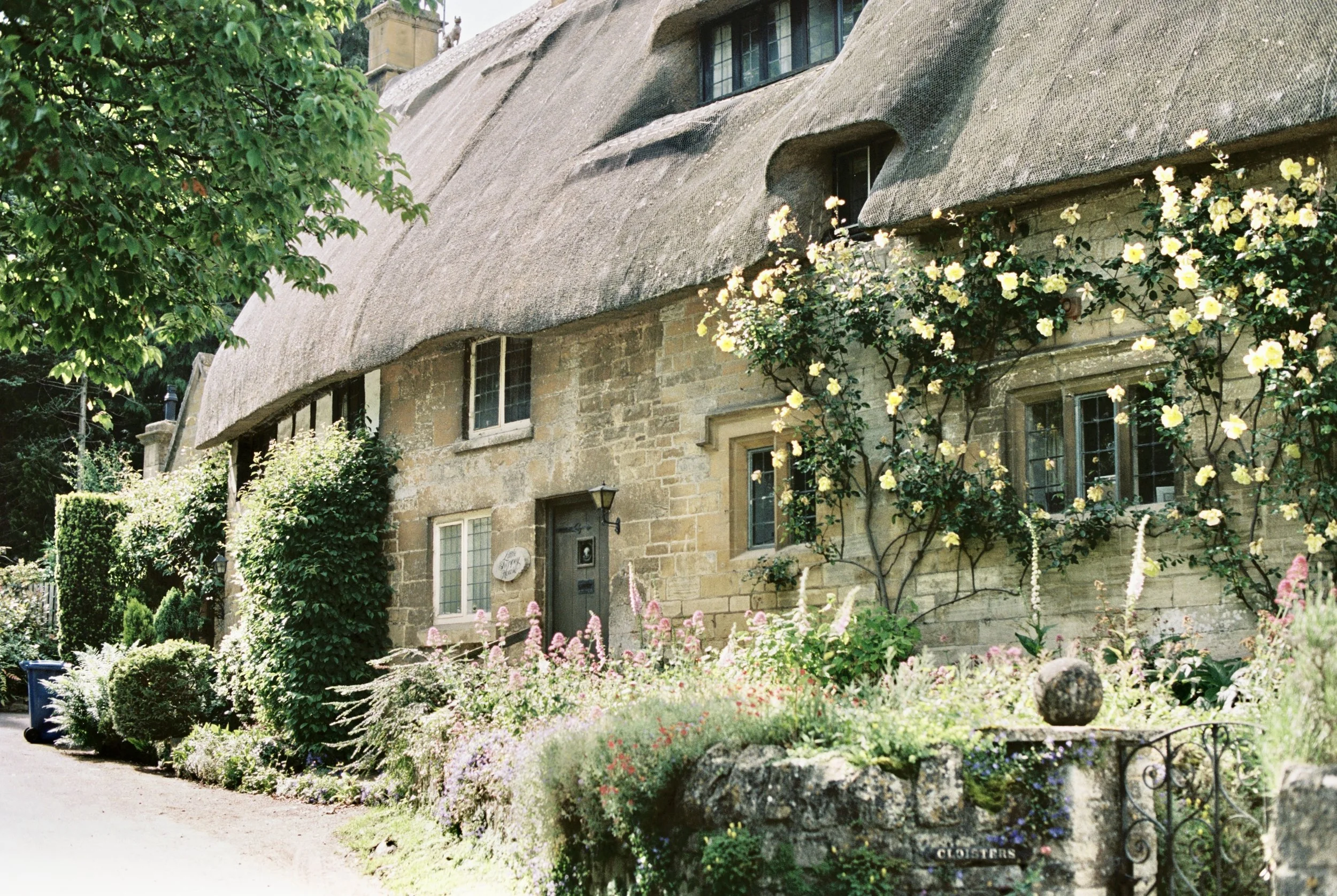
A thatched cottage set in the town of Broadway.
Even if you've never been to England, there is something familiar about the countryside, especially in the Cotswolds. The winding lanes, stone cottages, hidden gardens, and village greens feel like the settings of beloved classics many of us grew up with.
Exploring the Cotswolds can feel strangely like stepping into The Wind in the Willows, The Lion, the Witch and the Wardrobe, The Tales of Beatrix Potter, Winnie-the-Pooh, The Secret Garden, Alice's Adventures in Wonderland, or Brambly Hedge.
And it's no wonder. Much of the Cotswolds' historic architecture and landscape has been preserved, giving visitors the sense that they are stepping back into another era.
And then there's the aesthetic.
For years, design trends favoured minimalism, white interiors, and crisp lines. Today, many people seem to be craving something warmer and more personal. Spaces filled with books and plants, colour-drenched walls and country kitchens, inherited treasures juxtaposed with modern art. Cozy over curated.
The Cotswolds has always embraced that kind of beauty.
Nothing is perfectly matched. Everything has a story.
These are the sorts of settings that inspired writers such as Jane Austen and J. R. R. Tolkien, whose literary masterpieces are still celebrated today, and influenced designers like William Morris, father of the Arts and Crafts movement, whose textiles and designs are experiencing a modern resurgence.
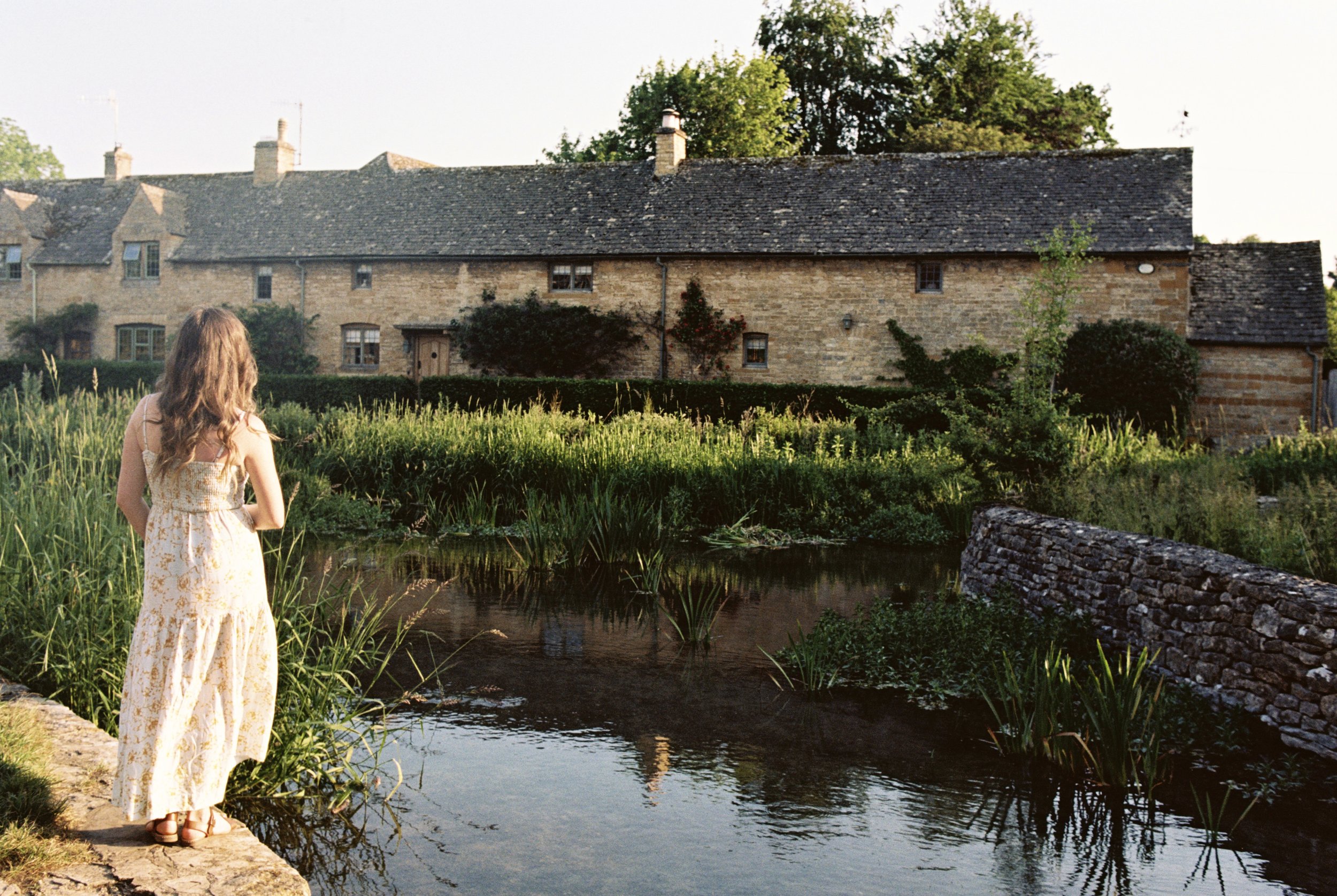
A guest from one of my Women’s Walking Retreat overlooks the River Eye in the village of Lower Slaughter.
Throughout the Cotswolds, nature and architecture, design and durability, form and function exist in tranquil harmony.
Perhaps that's what resonates most right now.
In a world that increasingly feels digital, fast, and dissonant, the Cotswolds offers opportunities to discover meaningful inspiration through beautiful craftsmanship, slower rhythms, and harmonious spaces—and then bring those lessons home.
Maybe that's why the Cotswolds are having a moment.
Not because they are trendy.
But because they offer something many of us have been longing for all along:
A homecoming.

Monastery Ruins of Hailes Abbey near Winchcombe.
